Eliminated Property Hazards
Removes the threat of major trunk or branch failure impacting your home during severe weather.
Controlled dismantling of hazardous, failing, or unwanted trees by qualified local arborists.
Direct tree removals across Railway Estate, Hermit Park, Hyde Park, and surrounding areas.
When you need professional tree removal Railway Estate wide, our qualified crew handles everything from hazardous dead gum trees to structurally compromised backyard canopies. We provide safe, controlled tree felling tailored to local conditions.
Railway Estate's older residential allotments often feature tall trees planted close to Queenslander homes and outbuildings. Combined with high water tables near Ross Island and monsoon-softened ground, removing large, decayed specimens requires precision sectional rigging.
Removes the threat of major trunk or branch failure impacting your home during severe weather.
Removes decayed, hollowed timber that frequently harbours subterranean termite colonies.
Opens up garden sunlight, clears room for extensions, sheds, or solar panel efficiency.
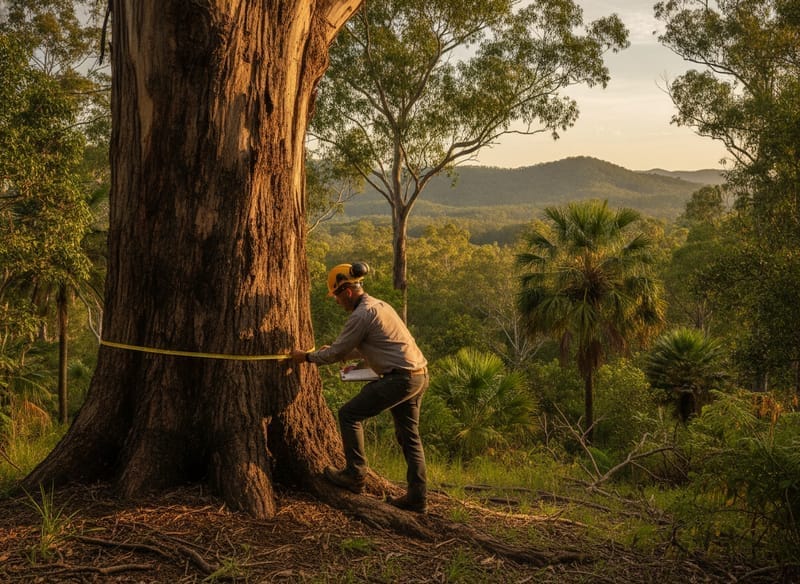
We evaluate species, lean, structural faults, access, and nearby infrastructure on your Railway Estate property.
We establish anchor points, drop zones, and lowering paths tailored to your yard's specific layout.
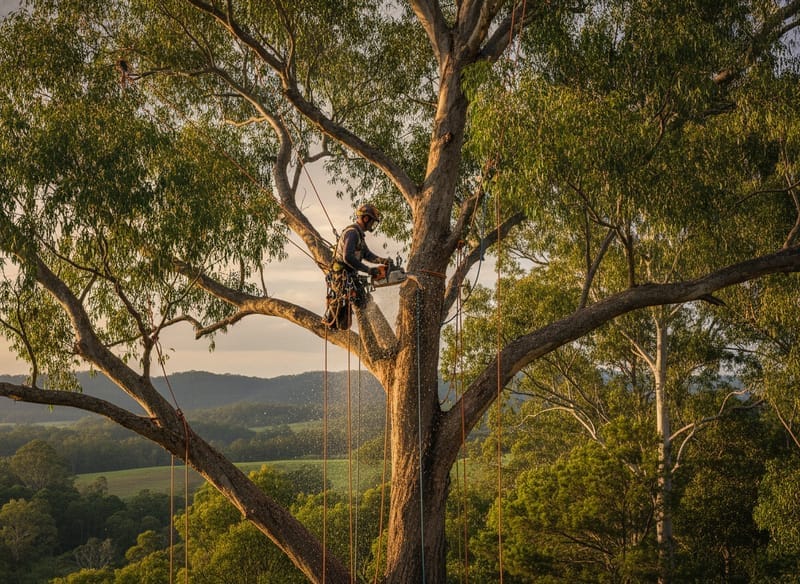
Our climbers de-limb the canopy before lowering the main trunk in controlled, manageable sections.
All logs and branches are mulched or removed, leaving your grounds tidy and secure.
When property owners need safe, complete Tree Removal Railway Estate, our local team at Townsville Arborist is ready to respond. Situated close to the Ross River and the city centre, Railway Estate features a mix of older character homes, established residential blocks, and sensitive tidal edges. The trees here face a brutal dry tropics climate, enduring months of extreme drought stress followed by intense wet seasons and cyclonic wind loadings.
Whether you are managing an oversized African Mahogany outgrowing its urban footprint, dealing with storm damage after a system like Cyclone Kirrily, or clearing a residential block for development, completely removing a tree requires heavy-duty expertise. We do not just trim problem trees; we dismantle them safely to the ground.
Our trucks, high-capacity chippers, and fully equipped climbers are ready to handle everything from dead, hazardous timber to complex over-house removals across Railway Estate, South Townsville, Oonoonba, and the wider Townsville region.
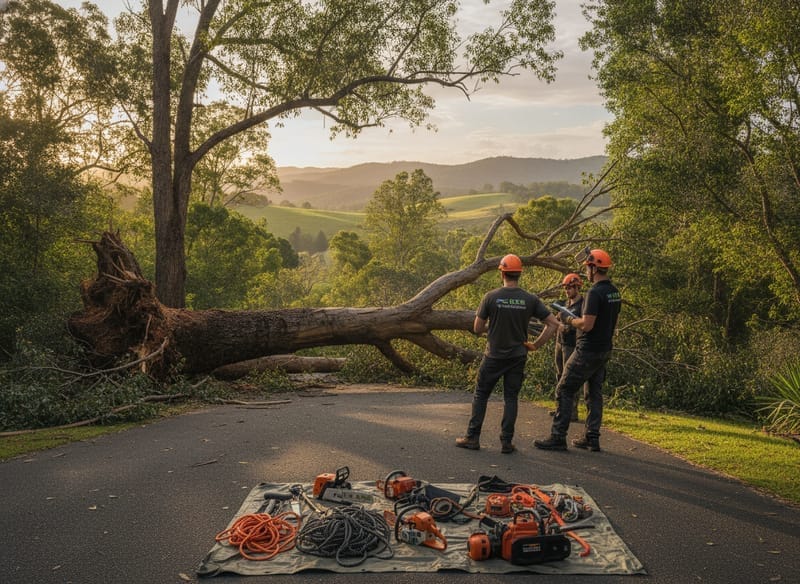
In Townsville's unforgiving climate, leaving a compromised tree standing is a significant risk. The failure mechanism here is well documented: trees spend most of the year under severe drought stress, and then cyclonic winds hit ground that has just gone from concrete-hard to saturated. When you delay essential Tree Removal Railway Estate, you leave your home, fences, and family exposed to catastrophic uprooting or sudden trunk snap.
DIY tree removal or hiring under-qualified labourers often ends in property damage or serious injury. Felling a mature tree in a confined urban space involves enormous weight, unpredictable tension, and complex rigging. Inexperienced operators often resort to dangerous practices like indiscriminate lopping, which leaves unstable stubs, or they fail to account for the dramatic shift in a tree's centre of gravity during a straight fell.
Our professional arborists take a highly controlled, compliant approach. We assess the structural condition, calculate the drop zones, and use advanced rigging to bring the canopy and trunk down in manageable sections. If a tree cannot be saved or poses an unacceptable risk to your infrastructure, complete removal by our team is the only definitive solution to protect your property before the next storm season arrives.
Removing a tree safely in an established suburb requires meticulous planning, a deep understanding of wood mechanics, and the right equipment. Here is exactly how our team executes removals in the constrained and highly variable environments found across Townsville.
Our process begins by assessing the tree's structural integrity, species profile, and surrounding targets. We evaluate drop zone availability, proximity to powerlines, and access constraints caused by narrow local streets or coastal terrain.
For trees located close to homes or overhanging fences, our AQF Level 3 climbers utilize advanced rope-access techniques. We dismantle the canopy piece by piece, using lowering ropes and friction devices to safely guide heavy limbs to the ground without impact damage.
Where a property has ample open space and a clear drop zone, we employ precision straight felling. This involves cutting a directional notch and back cut, using wedges or pull lines to guide the entire tree safely to the ground in one controlled motion.
For highly hazardous trees, dead timber that is unsafe to climb, or massive specimens trapped in tight backyards, we utilize crane-assisted removals. The crane supports the weight of massive trunk sections as they are cut, lifting them safely over structures.
Once the tree is down, our ground crew steps in. We use heavy-duty chainsaws to cross-cut the trunk into transportable logs. The canopy and limbs are fed through our high-capacity wood chippers, reducing the bulk to mulch before we load all debris into our tipper trucks.
From your first call to the final sweep of the yard, our approach to tree removal is systematic, safe, and entirely transparent. We start with an on-site consultation to inspect the target tree. During this visit, we assess access constraints, determine the safest dismantling methodology, and provide a detailed, obligation-free quote. Next, we manage the logistics. We check for any local regulatory triggers, ensuring that your removal does not conflict with protected vegetation zones, overlays, or state laws. On the scheduled day, our crew arrives with the necessary trucks, chippers, and rigging gear. We secure the work zone, implement traffic management if we are operating near a roadside, and brief the team on the specific structural hazards of your site. The physical removal is executed methodically. Whether climbing and dismantling an unstable Yellow Flame Tree or felling a dead Weeping Paperbark, we maintain absolute control over the timber. Finally, we execute a rigorous site cleanup. We rake and blow down the area, ensuring your yard is left spotless. The tree is completely gone, the wood is carted away, and the site is ready for your next landscaping project.
When engaging our team, you are hiring qualified professionals who operate to the highest industry standards. While AS4373 primarily dictates pruning practices, its principles guide our hazard assessments, ensuring we correctly identify trees that are beyond retention and require full removal. For development sites in Railway Estate, we operate in accordance with AS4970 to ensure retained trees are protected while target trees are safely extracted.
Safety is paramount on every job site. Our crews hold AQF Level 3 certifications in arboriculture, alongside necessary tickets for tree felling, working at heights, and EWP operation. We are fully insured with comprehensive public liability and WorkCover, providing complete peace of mind that your property is protected throughout the entire removal operation.
Townsville is uniquely pragmatic regarding private property vegetation. The Townsville City Council has no general tree preservation order and no permit scheme for routine private trees. However, if your Railway Estate property falls within the very high importance area mapped on overlay OM-08, or if you reside on a tidal edge where mangroves are strictly protected by the Fisheries Act 1994, specific regulations apply. State law via the Vegetation Management Act 1999 also governs clearing, though an imminent risk exemption exists for highly dangerous trees.
Locally, the dry tropics environment dictates tree health. We frequently remove failed Yellow Flame Trees and African Mahoganies, notorious for uprooting when cyclonic winds hit rain-soaked soil. In Railway Estate, the transition from coastal sands to reactive black cracking clay means root plates are highly unstable during the wet season. Our arborists understand these localized failure patterns and safely dismantle species that pose a critical risk to your home.
Once the tree is completely removed, you will need to manage the remaining ground space. If we have dismantled a large tree situated in reactive black clay, be mindful that the local soil moisture profile will change, which can sometimes cause minor ground movement around footings.
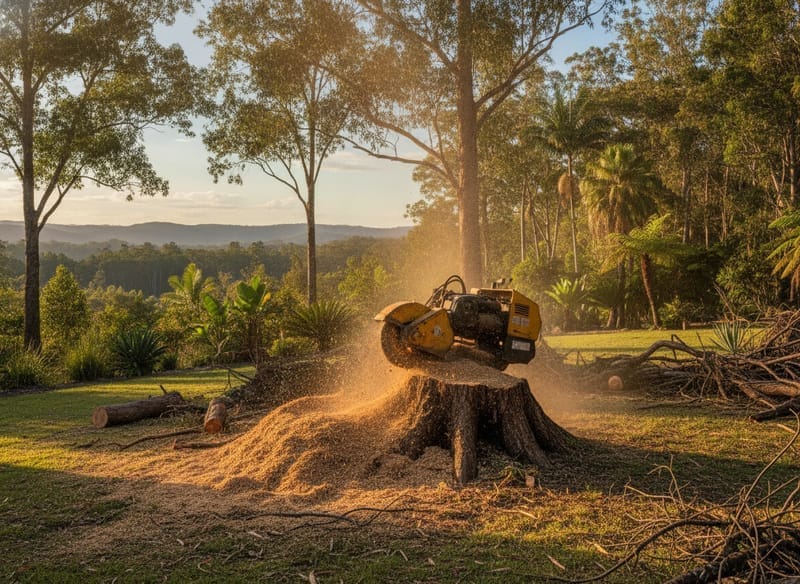
We highly recommend utilizing our professional stump grinding service to destroy the remaining root plate and prevent unwanted epicormic regrowth from the stump. If you plan to replant, choose a hardy species suited to Townsville's harsh wet-dry cycle. Call our team back if you notice structural issues or heavy lean in adjacent trees that have suddenly been exposed to new wind loads following the primary removal.
Tree removal costs in Railway Estate depend on the physical dimensions, location, and technical difficulty of the tree.
We inspect your property and provide an upfront, fixed-cost quote with zero hidden charges.
Our tree removal crews operate across Railway Estate and neighbouring suburbs:
Contact our qualified team for a safe, reliable quote on your property today.
Request a Free Quote