Controlled Tree Size
Achieve desired clearances from buildings and powerlines without triggering aggressive regrowth.
Professional height reduction, canopy management, and safe alternatives to destructive tree topping.
Canopy reduction and height management across Bluewater and surrounding areas.
Homeowners searching for tree lopping Bluewater usually want to solve a specific problem: a tree has grown too tall, branches are encroaching on roofs, or a heavy canopy poses a threat ahead of storm season. While traditional 'lopping' leaves ugly stubs that decay and grow back dangerously, our qualified arborists provide professional canopy reduction and selective pruning that solves your space issue while keeping your property safe.
In Townsville's dry tropics climate, topping a tree (crude lopping) exposes main stems to harsh sunscald and rapid internal rot, while promoting weakly attached shoots that tear away easily in monsoonal winds. We give Bluewater property owners practical alternatives that manage tree size safely.
Achieve desired clearances from buildings and powerlines without triggering aggressive regrowth.
Eliminate heavy end-weight limbs that risk snapping in high winds.
Properly reduced trees require less frequent trimming than trees subjected to crude lopping.
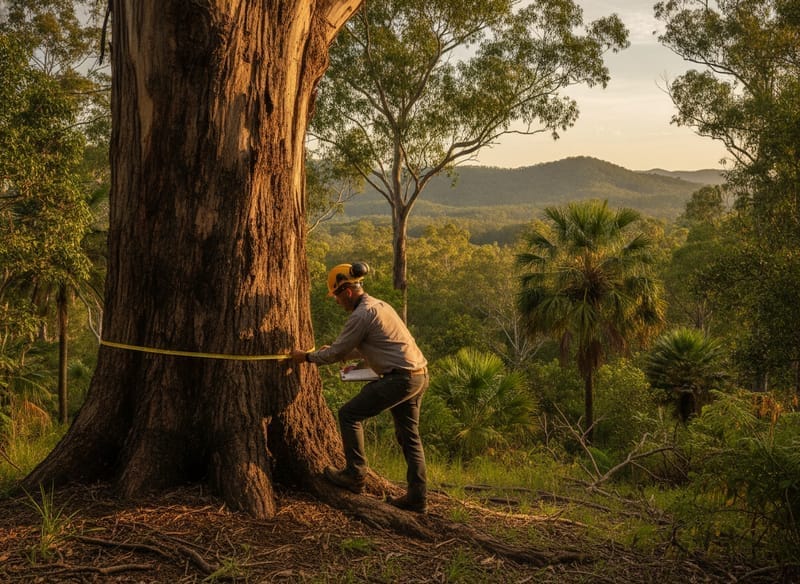
We inspect your trees in Bluewater to determine whether reduction pruning or complete removal is the best option.
We explain how we can achieve your clearance goals while preserving structural stability.
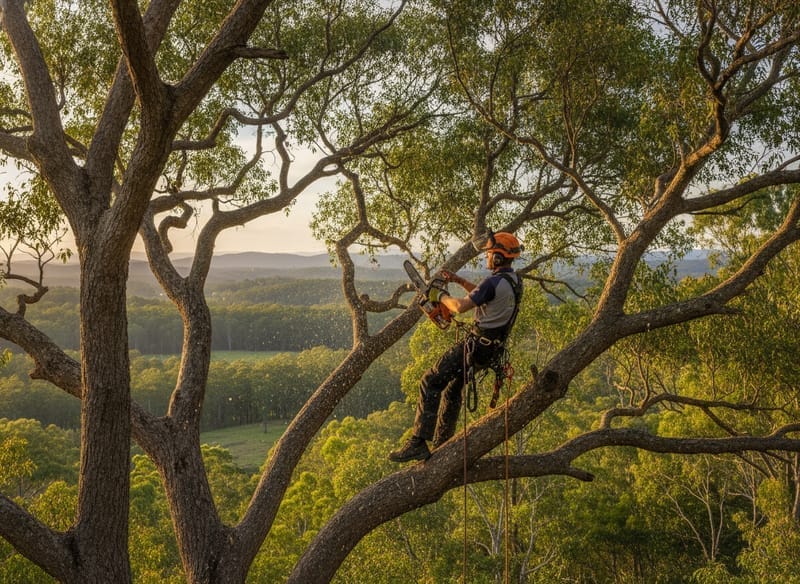
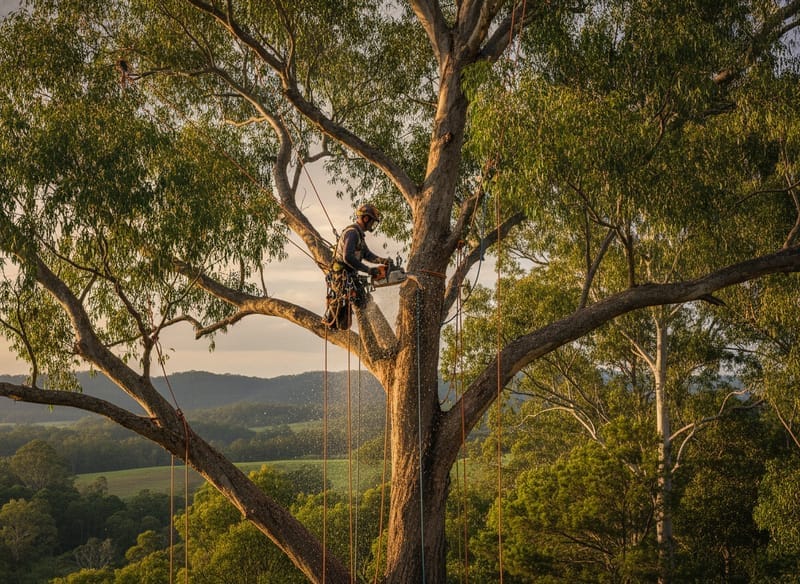
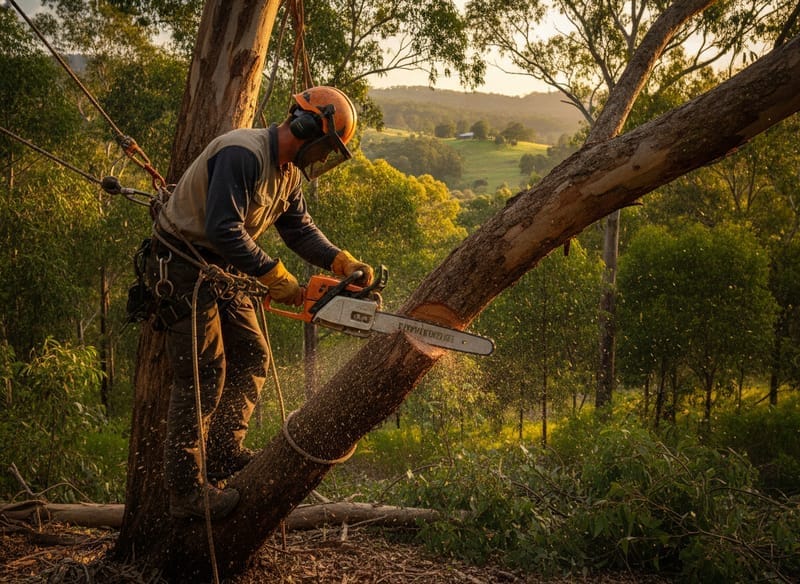
Our climbing arborists lower branches carefully using targeted reduction cuts.
All cut foliage is chipped and the yard left spotless.
Managing established trees in Townsville's unique dry tropics climate requires genuine local expertise and an understanding of our extreme weather cycles. When it comes to Tree Lopping Bluewater properties demand a highly specialised approach to ensure safety, structural integrity, and long-term health. Situated north of the city, Bluewater is defined by its sweeping acreage blocks, native bushland corridors, and established residential gardens. These larger blocks often feature massive mature canopies that require regular maintenance to mitigate risks during our unpredictable wet seasons.
At Townsville Arborist, our team of fully qualified climbing arborists is dedicated to delivering professional canopy management tailored to this specific environment. Whether you need to clear overhanging branches from your roofline, reduce the height of a hazardous tree, or prepare your property for the upcoming cyclone season, we provide solutions that prioritise safety and compliance. We understand the specific soil profiles and climatic stressors of the region, ensuring every cut we make supports the long-term stability of your trees while protecting your home and family.
The term "tree lopping" is commonly used by homeowners when they simply want a large tree made smaller, safer, or less intrusive. However, in the strict arboricultural sense, traditional lopping or "topping" involves indiscriminate heading cuts that leave large, exposed stubs. This outdated practice is highly damaging and explicitly discouraged under Australian Standards. When a tree is topped, it loses a massive portion of its energy-producing foliage. In response to this severe stress, the tree rapidly pushes out epicormic shoots—fast-growing, weakly attached branches that are highly susceptible to snapping. In Townsville's dry tropics environment, this creates a dangerous scenario. Trees spend most of the year under severe drought stress, only to be battered by extreme cyclonic winds during the wet season. Traditional lopping leaves large wounds that struggle to compartmentalise in the harsh sun, providing an easy entry point for decay fungi and termites. Species like the African Mahogany and Yellow Flame Tree are already notorious for uprooting or snapping during weather events like Cyclone Kirrily; poor pruning only amplifies this risk. Our solution is to apply proper, AS4373-compliant pruning techniques. Instead of lopping, our team performs targeted crown reductions, selective thinning, and precise collar cuts. This achieves the size reduction and clearance you need without compromising the tree's structural integrity, ensuring it remains resilient against cyclonic gusts and the harsh dry season.
When you request canopy reduction or tree lopping, we assess the structural needs of the tree and apply the correct AS4373-compliant technique to achieve your goals safely.
When a tree has outgrown its space, we perform a formal crown reduction rather than indiscriminate topping. This involves carefully pruning branches back to structural lateral growth points. This AS4373-compliant method reduces the overall height and spread of the tree while maintaining its natural shape and preventing the flush of weak epicormic regrowth.
For acreage properties requiring clearance for tractors, ride-on mowers, or driveways, we perform crown lifting. Our climbers selectively remove the lowest branches back to the trunk collar. This provides the necessary vertical clearance without unbalancing the upper canopy or exposing the trunk to excessive sunscald.
To reduce the 'sail effect' during cyclone season, we selectively thin the secondary and tertiary branches within the canopy. This allows cyclonic winds to pass through the tree rather than pushing against a solid wall of foliage, significantly reducing the risk of uprooting—a common failure mode for local species on wet soils.
When a specific limb is causing an issue—such as overhanging a boundary fence, shed, or roofline—we target that exact problem. We trace the problematic branch back to a suitable junction and remove it safely using rigging techniques, leaving the rest of the healthy canopy intact.
Townsville's severe wet and dry cycles cause significant stress to mature trees, frequently resulting in dead branches. We systematically move through the canopy to remove dead, diseased, or terminally stressed wood before it can snap and fall on targets below, mitigating hazards while improving the tree's appearance.
Delivering high-quality tree care requires a meticulous, structured approach. Step one begins with a comprehensive on-site assessment at your Bluewater property. We evaluate the species of the tree—identifying resilient native species like the Weeping Paperbark versus high-risk introduced species like the African Mahogany. We listen to your goals, assess the health of the tree, and determine the safest access methods, whether that involves elevating work platforms (EWPs) or advanced rope-access techniques for tight acreage boundaries.
Step two involves transparent quotation and planning. We outline exactly which AS4373-compliant techniques will be used to achieve your desired clearance or height reduction. We also verify if your property falls under any specific overlays, though private tree work in Townsville is generally straightforward.
Step three is execution. Our AQF Level 3 climbing arborists use top-handle chainsaws and modern rigging equipment to carefully dismantle targeted sections of the canopy. We use friction devices to lower heavy limbs to the ground safely, completely avoiding damage to your garden, fences, or outbuildings. Step four is processing; our ground crew feeds all green waste and limbs through our high-capacity 12-inch wood chippers, turning bulky branches into valuable mulch. Finally, step five is our comprehensive site clean-up, ensuring your acreage or residential block is left raked, tidy, and completely free of debris.
At Townsville Arborist, we do not compromise on safety or professional standards. All of our canopy reduction and pruning work is executed strictly in accordance with AS4373—Pruning of Amenity Trees, ensuring every cut supports the physiological health of the tree. Our field operations are conducted by fully qualified AQF Level 3 climbing arborists who hold all necessary tickets, including Working at Heights, EWP operation, and aerial rescue.
For more complex sites or development applications, our AQF Level 5 consulting arborist can provide comprehensive arboricultural reports and Tree Protection Plans in accordance with AS4970. We are a fully insured operation, carrying comprehensive public liability insurance and WorkCover for our entire team. From our traffic management protocols on busy road frontages to our daily pre-start risk assessments on acreage blocks, we maintain the highest tier of workplace health and safety in the industry.
Providing professional Tree Lopping Bluewater residents trust means navigating the specific environmental and regulatory landscape of the region. Bluewater spans a diverse terrain, from deep cracking clays to shallower, rockier soils closer to the foothills. This soil profile directly impacts how tree root plates behave during the transition from the dry season to the saturated, cyclonic wet season, making weight reduction in the canopy a critical safety measure.
Unlike many other regions in Australia, Townsville City Council is exceptionally practical regarding private vegetation. There is no blanket tree preservation order, and permits are generally not required for private residential trees unless your property is situated within the OM-08 Natural Assets overlay. However, the State Vegetation Management Act 1999 still applies to broadscale clearing. Fortunately, standing exemptions exist for the removal of vegetation that poses an imminent risk of serious personal injury or damage to infrastructure. We understand these local frameworks inside and out, ensuring your tree work is perfectly aligned with both local council and state regulations.
Proper maintenance doesn't end once the chainsaws are turned off. After a significant canopy reduction, your trees need time to compartmentalise the pruning wounds. In Townsville's harsh dry tropics climate, it is vital to provide the tree with deep, infrequent watering during the dry season to minimise physiological stress and promote healthy recovery.
We recommend monitoring the canopy in the months following the pruning. Keep an eye out for any aggressive epicormic growth or signs of termite activity in older trunks, which is a common issue locally. For large, mature trees on acreage properties, we highly recommend an annual visual inspection by our arborists—ideally in October, just before the cyclone season begins—to ensure the structural integrity of the canopy remains uncompromised.
Pricing for canopy reduction and tree management in Bluewater varies according to tree size, accessibility, and work scope.
We provide honest, fixed-price quotes with clear advice on the best management method for your trees.
We provide canopy management and reduction services across Bluewater and neighbouring localities.
Contact our qualified arborists for safe height reduction and tree management in Bluewater.
Get a Free Quote